
Aquarium algae guide
What Causes Algae Growth in an Aquarium?
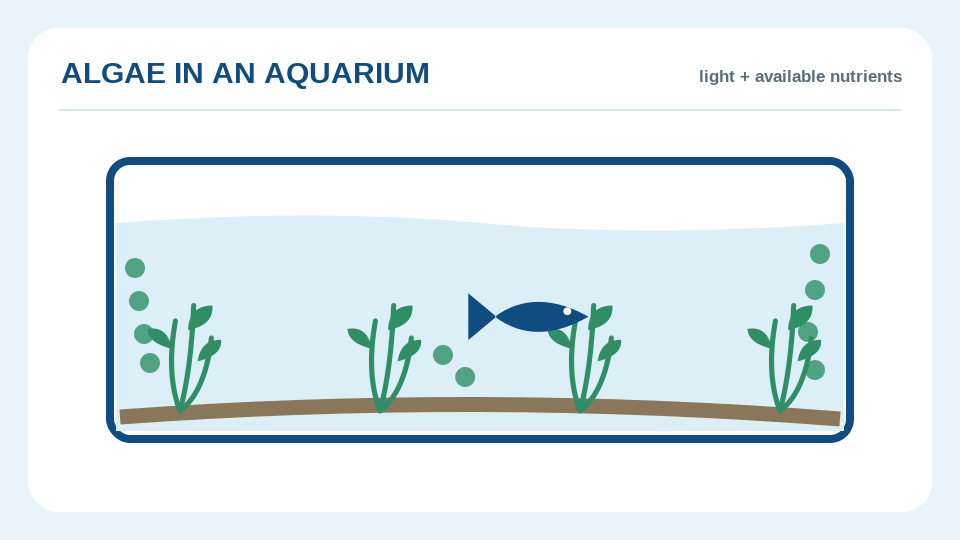
Algae grows when light and nutrients give photosynthetic organisms an opportunity to multiply. A little algae is normal; a visible outbreak usually signals that usable resources are arriving faster than plants and the wider aquarium system can take them up. Long lighting, uneaten food, decaying leaves, nutrient-rich source water, weak plant growth, and uneven circulation may all contribute. The useful question is not simply which product removes the algae, but what has changed in the tank. This guide shows how to connect the growth you see with the conditions behind it.
At a glance
Quick Reference
- Excessive or poorly matched lighting
- Excess nutrients in the water
- Overfeeding and fish waste
- Decaying organic matter
- Inconsistent aquarium maintenance
- Poor circulation or stagnant areas
- Plant, fertilizer, light, and CO₂ imbalance
- Nutrients entering through source water
- Instability in newly established aquariums
Algae is usually a symptom of available resources and imbalance, not a disease in the aquarium.
Overview
Why Does Algae Grow in an Aquarium?
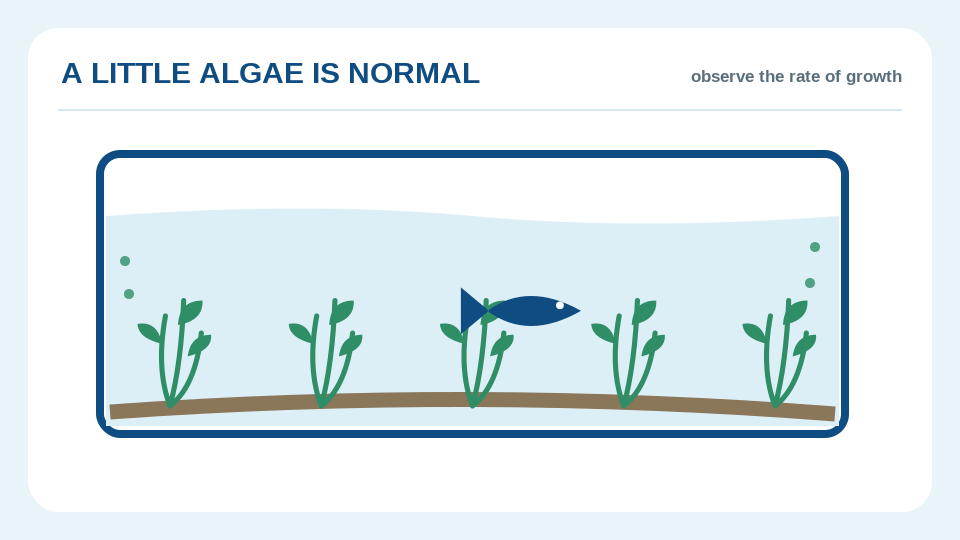
Algae and other photosynthetic growth are normal in aquatic environments. They use light as energy and draw on carbon, nitrogen, phosphorus, and other nutrients to build new cells. Aquarium plants use many of the same resources. A tank that supports living plants and animals therefore has the ingredients for some algae; a permanently sterile-looking aquarium is not a realistic biological goal.
What matters is the rate and location of growth. A thin film that appears slowly on glass is different from strands smothering plants every few days. When light, available nutrients, organic waste, plant uptake and maintenance no longer match, algae can exploit the gap. In a newly established tank, that relationship may shift week to week while plants adapt and microbial communities develop.
Notice whether growth is limited to the brightest glass, a sheltered corner, older plant leaves, or the entire water column. Those patterns suggest different checks. A sudden bloom after changing a light or feeding routine is also more informative than a photograph taken without a date or history. Small patches can simply be part of the tank's normal maintenance cycle.
Normal Algae vs. an Algae Problem
| Usually normal | Worth investigating |
|---|---|
| Thin film on glass or hardscape | Rapid growth every day |
| Small patches that spread slowly | Plants repeatedly become covered |
| Minor growth grazed by suitable livestock | Thick hair-like growth or recurring green water |
| Some growth after a change | Large cyanobacteria mats or quick return after cleaning |
Visible growth is a clue, not a diagnosis. The same appearance can follow different combinations of light, feeding, water chemistry, plant condition and flow. Identify where and when it appears, then compare those observations with recent changes. The sections below examine each potential cause in turn so you can test a plausible explanation instead of changing everything at once.
1. Too Much Light — or Light the Aquarium Cannot Use
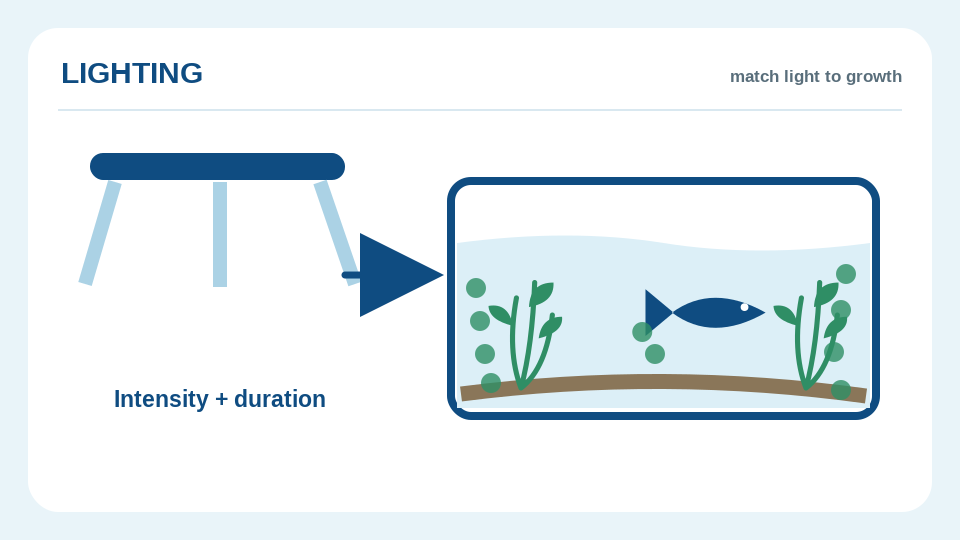
Algae photosynthesizes, so light supplies the energy for growth. A very long photoperiod, excessive fixture intensity or direct sunlight can give algae more energy than the aquarium's plants can use. A window may add hours of strong, changing light even when the tank's timer looks reasonable. Leaving aquarium lighting on continuously also removes the normal day and night rhythm.
Light rarely explains an outbreak alone. Dense, healthy plants may use it effectively while sparse or struggling plants cannot. In a high-light tank, unstable CO₂ or a nutrient shortage can limit plant growth; an abrupt brightness increase may outpace adaptation.
Lighting Problems That Commonly Encourage Algae
- Very long or irregular photoperiods
- Direct sunlight from a nearby window
- Excessive intensity for the plant mass
- Sudden increases in light
- High light while plants are weak or sparse
Many freshwater keepers use roughly six to eight hours as a conservative starting photoperiod while investigating algae, then adjust for plant requirements and light intensity. It is a starting point, not a rule for every aquarium.
Duration and brightness are separate controls. Shortening a very long day may help, yet an extremely intense light can still overwhelm slow-growing plants during a shorter period. If the tank receives afternoon sun, note those hours separately from the fixture timer. Change a setting gradually and watch new plant growth as well as algae.
2. Excess Nutrients Give Algae More Fuel
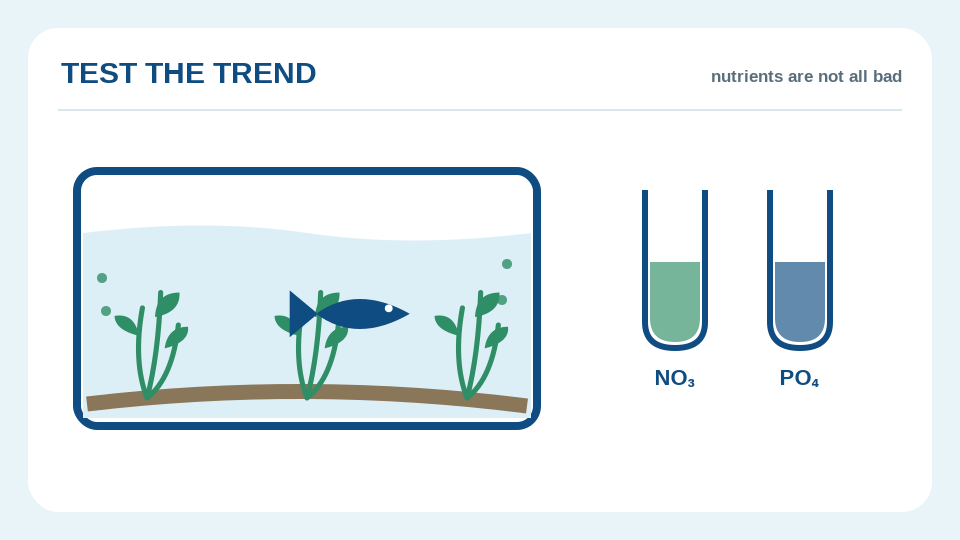
Nitrogen, phosphorus, carbon and trace elements are building materials for photosynthetic growth. Nitrate and phosphate are not automatically bad: healthy plants need them too. Problems arise when the supply and the tank's ability to use, bind or export nutrients drift apart.
Organic matter is a continuing source. Food and waste break down, releasing compounds into the water; trapped detritus can keep doing so inside a filter or substrate. Fertilizer can also add nutrients, but removing fertilizer indiscriminately may weaken plants and reduce their competitive advantage. A planted aquarium and an unplanted fish display should not be judged by one universal nitrate or phosphate number.
A low test result does not always mean the tank had no available nutrients. Plants and algae can take up dissolved material between tests, while decomposition continues to add more. Sample at comparable times and write down changes in feeding or dosing. The direction of several readings, together with plant health, is more useful than one number.
| Source | What It Adds | Why It Can Encourage Algae |
|---|---|---|
| Uneaten food | Decomposing organics | Gradual nutrient release |
| Fish waste | Nitrogen and organics | Higher load as stocking rises |
| Dead leaves | Plant tissue nutrients | Local decay on surfaces |
| Dead livestock or debris | Concentrated organic matter | Rapid decomposition |
| Fertilizer | Plant macro- and micronutrients | Unused supply if growth is weak |
| Dirty substrate | Stored detritus | Continued release near the bottom |
| Loaded filter media | Trapped organic debris | Waste remains in the system |
| Source water | Variable dissolved compounds | Replenishes nutrients with each change |
3. Overfeeding and Overstocking Increase Organic Waste

Food that fish do not eat eventually breaks down. More food can also mean more fish waste. The chain is straightforward: excess food → uneaten food and waste → decomposition → dissolved nutrients → more resources available to algae. Adding more fish creates a similar pressure even if each animal is fed appropriately, because the total waste load rises.
The goal is not to underfeed fish. Feed for the animals you actually keep, observe what remains, and remove obvious leftovers. A sudden increase in feed quantity or frequency can be more informative than an isolated nutrient reading. Compare filter loading and substrate debris before and after the change.
Signs Feeding or Stocking May Be Contributing
- Food remains after the feeding period.
- Waste gathers soon after cleaning.
- Nitrate rises rapidly between maintenance sessions.
- Mechanical media becomes dirty unusually quickly.
- Debris accumulates in the substrate.
- Algae worsens after feeding increases.
4. Inconsistent Maintenance Allows Nutrients to Accumulate

Maintenance controls material that would otherwise accumulate. Irregular water changes, dead leaves left to decay, debris lodged in substrate and clogged mechanical media can all keep releasing nutrients. A tank may look clear after the glass is wiped while its nutrient inputs and water flow remain unchanged.
A mature biological filter is valuable. Cleaning a loaded sponge or pad does not mean sterilizing all biomedia or replacing every established surface at once. Remove excessive trapped solids while preserving the biofilm that processes ammonia and nitrite. If flow falls, check intake, media and hoses rather than assuming the filter is still working at its usual rate.
Maintenance Areas to Check
- Feeding amount and leftovers
- Water-change consistency
- Substrate debris
- Filter flow and loaded pads
- Dead or melting leaves
- Organic buildup behind hardscape
- Water-test trends
5. Source Water Can Add Nutrients Before the Water Enters the Tank
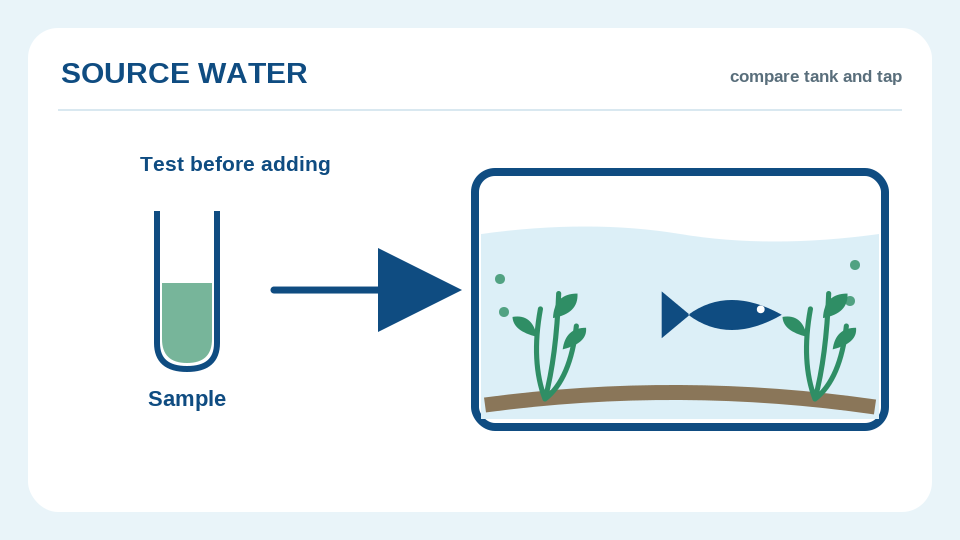
Not every nutrient starts inside the aquarium. Tap water or another source may contain nitrate, phosphate, silicate and other dissolved minerals. Their concentrations vary by location and supply. If algae reliably returns after regular water changes, a comparison between fresh source water and tank water can reveal an input that ordinary in-tank testing misses.
Sample both waters using appropriate tests, then compare the results with past readings and the type of growth present. A brown film in a young tank may make silicate worth checking; rising nitrate in a mature tank may point elsewhere. Source-water treatment is a response to evidence, not a universal first step.
Use the same test method for both samples when possible. A replacement-water reading that repeatedly starts higher than the aquarium's usual value is a stronger clue than one uncertain strip result.
- Test the replacement water before it enters the aquarium.
- Record the tank result before and after a normal water change.
- Consider treatment only if the source is contributing and the alternative suits the livestock.
6. Weak Plant Growth Can Give Algae an Opportunity

Actively growing aquatic plants use light, carbon, nitrogen, phosphorus and micronutrients. In a densely planted tank, that uptake can leave fewer readily available resources for nuisance growth. Plant mass alone is not enough, however: newly planted stems may be adapting, and damaged leaves may no longer grow well. Dying leaves can instead add organic waste.
Plants may struggle because light is too weak for the chosen species, light is too strong for the available carbon, a nutrient is deficient, or fertilizer dosing changes sharply. Injected CO₂ that rises and falls unpredictably can also limit growth in a high-light setup. A tank with very few plants has little plant uptake to balance its light and nutrient supply.
Separate old leaves from new growth when judging a plant. An older leaf may remain damaged after conditions improve, while fresh leaves show whether the plant is adapting. Trimming decaying tissue removes an organic input, but it will not correct the reason growth stalled. Species choice and shading also change how much light each plant can use.
Why Aquarium Plants May Lose the Competition
- Too much light for available CO₂, or too little for the species
- Nutrient deficiency or erratic fertilizer dosing
- CO₂ fluctuations in injected tanks
- Adaptation after setup or transplanting
- Damaged, melting or heavily shaded leaves
- Insufficient healthy plant mass
7. Light, Fertilizer, and CO₂ Imbalance in Planted Aquariums

Plant growth depends on interacting resources. Light drives demand; nutrients and carbon supply the materials needed to use that energy. High light with inadequate carbon or a missing nutrient can leave plants struggling while algae takes advantage. Heavy fertilization combined with weak growth can leave more nutrients unused. Extremely low nutrients may also weaken plants.
| Pattern | Effect on Plants | What to Examine |
|---|---|---|
| High light; insufficient CO₂ or nutrients | Cannot use all available energy | Light level, plant demand, stable supply |
| Heavy dosing; weak growth | Lower nutrient uptake | Plant health and actual consumption |
| High light; fluctuating injected CO₂ | Growth becomes inconsistent | Delivery schedule and circulation |
| Very low nutrients | Deficiency limits growth | Leaves and water-test trends |
CO₂ injection does not kill algae by itself, and fertilizer is not automatically its cause. Both low-tech and high-tech planted tanks need reasonably matched resources. Compare plant response over time rather than adjusting several controls together.
In an injected tank, circulation affects whether carbon-rich water reaches all planted areas. A diffuser working in one corner does not prove uniform availability. Keep the delivery schedule consistent with the lighting period and watch livestock as well as plants. Never raise CO₂ solely to chase algae without considering animal safety and actual plant response.
8. Poor Water Circulation Creates Local Problem Areas
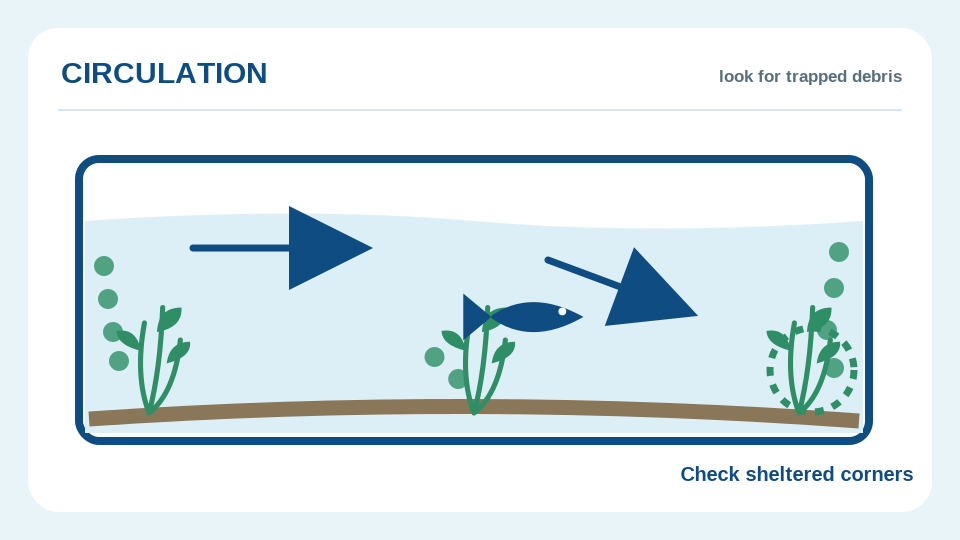
A whole-tank test can look acceptable while a sheltered corner collects food, waste and decaying leaves. Water may move strongly near the filter outlet yet hardly move behind wood, rocks, thick planting or equipment. These areas can keep supplying organic matter and create a repeatable place for visible growth.
Slime-like blue-green growth often prompts a circulation check, particularly when it returns to the same debris-rich location. Blue-green “algae” is cyanobacteria, a group of photosynthetic bacteria rather than true algae. Low flow can be one contributing condition, but appearance and location alone do not prove a single cause.
Places to Check for Dead Spots
- Behind large rocks or driftwood
- Inside dense plant groups
- Aquarium corners
- Under or behind equipment
- Any place where debris visibly settles
9. New Aquariums Are Especially Prone to Algae
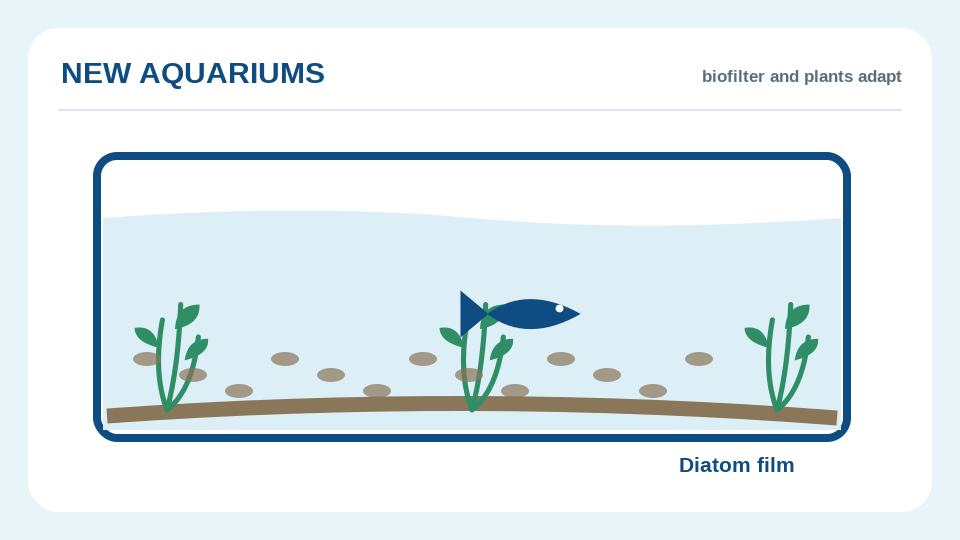
A young aquarium is changing quickly. Biological filtration is still developing, microbial communities are shifting, and new plants may be adapting to submerged growth. Nutrient uptake is not yet steady. Ammonia can become temporarily available during cycling or after a disturbance, while some new substrates and source waters add silicate or nutrients.
Brown diatoms often appear as a soft, dusty film on glass and decorations in relatively new tanks. Silicate availability can contribute. The film may become less prominent as the system matures, though persistent growth deserves a closer look at water and maintenance. “Brown algae” is a convenient hobby name, but diatoms are a distinct group of photosynthetic organisms.
Do not confuse a maturing biofilter with a finished one. Test ammonia and nitrite when livestock is introduced or after major changes, because a visible algae phase cannot tell you that nitrogen processing is ready. New plants may shed leaves while converting to submerged growth; remove the decay and observe whether healthy replacement leaves appear.
| Early Sign | Possible Context | Check First |
|---|---|---|
| Soft brown coating | Diatoms, new surfaces, available silicate | Tank age and source water |
| Green water | Free-floating photosynthetic cells | Light, nutrients, ammonia, cycling |
| Algae on new leaves | Plants adapting or melting | New growth and decaying tissue |
10. The Type of Algae Can Help Identify the Cause
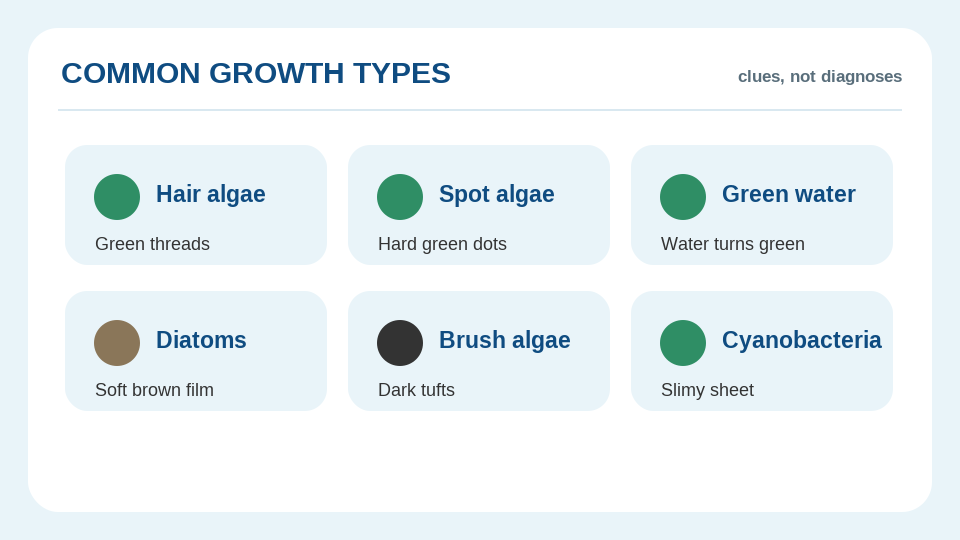
Appearance narrows the questions you should ask. A hard spot on glass differs from green water, while a slimy sheet may not even be true algae. These descriptions are practical clues; species identification and cause are more complicated than a single chart can show.
| Algae Type | What It Looks Like | Common Conditions | Investigate First |
|---|---|---|---|
| Green hair algae | Long green threads | Strong light with resource imbalance | Light, waste, nutrients, plant growth |
| Green spot algae | Hard green dots | Strong light or phosphate imbalance | Intensity, duration, nutrient pattern |
| Green water | Water itself turns green | Free-floating phytoplankton; light, nutrients or ammonia may contribute | Sunlight, feeding, cycling stability |
| Brown diatoms | Soft dusty brown film | Young tanks; available silicate | Tank age and source water |
| Black beard / brush algae | Dark or reddish tufts | Often appears with unstable planted-tank conditions or organic loading | Plant health, waste, flow, CO₂ stability |
| Cyanobacteria | Slippery blue-green sheet, sometimes odorous | Can recur in nutrient-rich low-flow areas | Dead spots, debris, circulation |
Use this as a clue, not a verdict. Several causes may be present at once. A patch of hair algae does not prove one missing nutrient, and cyanobacteria is not diagnosed solely by where it grows. Compare appearance with tank history and water tests.
11. How to Find the Real Cause of an Algae Outbreak
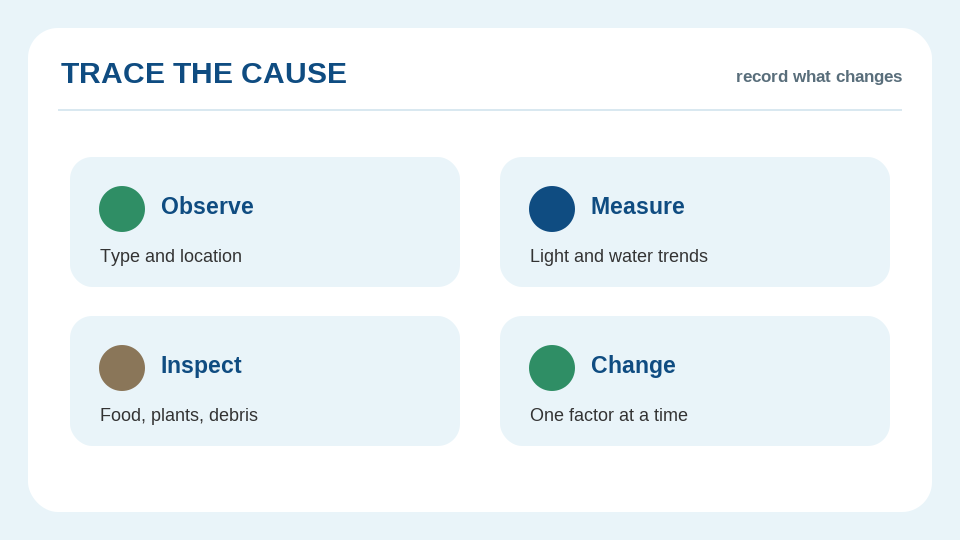
Make a simple record before changing the tank. Note what grows, where it grows and how fast it returns after cleaning. A localized patch suggests different checks from water that turns green throughout the aquarium. Then work from inputs toward plant health and system stability.
Record a baseline photo, the lighting timer, feeding frequency, plant condition and recent test results on the same date. Repeat the comparison after a measured change. If the growth slows but plants also decline, the adjustment may have suppressed both rather than improving balance. That distinction matters before repeating the same intervention.
- Identify the growth. Distinguish film, strands, spots, green water, diatoms or a slimy mat.
- Map its location. Note whether it is local or tank-wide.
- Review light. Record hours, intensity, sunlight and recent changes.
- Review feeding and stocking. Look for leftovers and a rising waste load.
- Compare water tests. Trends tell more than one isolated result.
- Test source water if nutrient accumulation remains unexplained.
- Inspect substrate and filter for trapped organics and declining flow.
- Remove dead material and note whether plants are melting.
- Check circulation behind hardscape and in corners.
- Assess planted-tank growth, fertilizer consistency and CO₂ delivery if used.
- Consider tank age and any recent cycling disturbance.
- Change one major variable at a time where practical, then observe the trend.
Do Not Diagnose Algae From One Number Alone
- Use appearance and location together.
- Include tank age, light schedule and nutrient trends.
- Observe new plant growth, not only old leaves.
- Review maintenance and changes before the outbreak.
Frequently asked questions
Aquarium Algae FAQ
Use the answers as starting points, then check your own tank's history.
Is algae in an aquarium normal?
Yes. Small amounts of photosynthetic growth are expected in many mature aquariums. A thin film on glass or modest patches on hardscape do not automatically mean the tank is unhealthy. The useful question is whether growth is accelerating, covering plants or returning rapidly after ordinary maintenance. Compare the amount with the aquarium's usual pattern rather than aiming for a biologically sterile tank.
Does too much light cause aquarium algae?
Excess light can strongly encourage it, especially when nutrients are available and plants are not using the energy well. Duration and intensity both matter; direct sun can add to artificial light. Yet light is rarely the whole explanation. Check feeding, waste, plant growth and, in injected planted tanks, CO₂ stability before assuming the light alone is at fault.
Does overfeeding fish cause algae?
It can. Uneaten food and additional fish waste decompose, adding nutrients that algae may use. Overfeeding may also load mechanical media and substrate faster. Feed appropriately for the livestock rather than cutting food blindly. Observe leftovers, filter loading and the trend in water tests after a feeding change to see whether waste input is contributing.
Why does my aquarium grow algae even after water changes?
A water change may reduce accumulated substances while the source remains: excessive light, trapped debris, weak plants or repeated overfeeding. Replacement water itself may contain relevant nutrients, so compare its test result with the tank's. Note whether algae returns to the same low-flow location. Cleaning the visible growth treats a symptom, while the continuing input can produce another bloom.
Why does a new fish tank get brown algae?
A soft brown coating in a new tank is often diatoms. Newly wetted surfaces, changing microbial communities and available silicate can contribute. Many cases become less prominent as the aquarium settles, but do not use age as the only diagnosis. Check source water, plant adaptation and whether the tank is cycling normally if the coating persists or other water-quality issues appear.
Can live plants prevent algae?
Healthy, actively growing plants use light, carbon and nutrients that algae can also use, so they can reduce the opportunity for nuisance growth. They are not a guarantee. New, melting or nutrient-deficient plants take up less and may release organics as leaves die. Evaluate new growth and the match between light, nutrients and carbon rather than simply counting plants.
Why is my aquarium water green?
Green water usually means free-floating microscopic photosynthetic organisms have multiplied in the water column. Strong light, abundant nutrients or an ammonia pulse in a young or disturbed tank can contribute. Because the water itself is colored, scraping glass will not address it. Review sunlight, lighting, feeding and cycling stability, and test water before choosing a response.
Will algae-eating fish, shrimp, or snails solve an algae problem?
Suitable grazers can reduce some visible growth, but they do not necessarily change the light, waste or nutrient inputs that caused it. Species also differ in what they eat and whether they suit the aquarium. Adding livestock increases bioload, so do not purchase an animal solely as a cleanup tool. Diagnose the conditions while considering grazers as one part of routine care.
How long should aquarium lights stay on?
The answer depends on plant species, light intensity, tank depth and sunlight exposure. Roughly six to eight hours is a common conservative troubleshooting start for many freshwater setups, not a universal requirement. Keep the schedule consistent, observe plant growth and algae response, then adjust gradually. Marine and specialized planted systems may need different light programs.
Should I use chemicals to stop algae?
A treatment may have a place for a specific identified problem, but it does not explain why growth accelerated. Some approaches can affect plants, livestock or biological filtration, so follow product guidance and verify compatibility. Start with the likely inputs: light, food, organic waste, plant condition, source water and flow. Long-term improvement depends on correcting the cause.
Conclusion
What Really Causes Algae Growth in an Aquarium?
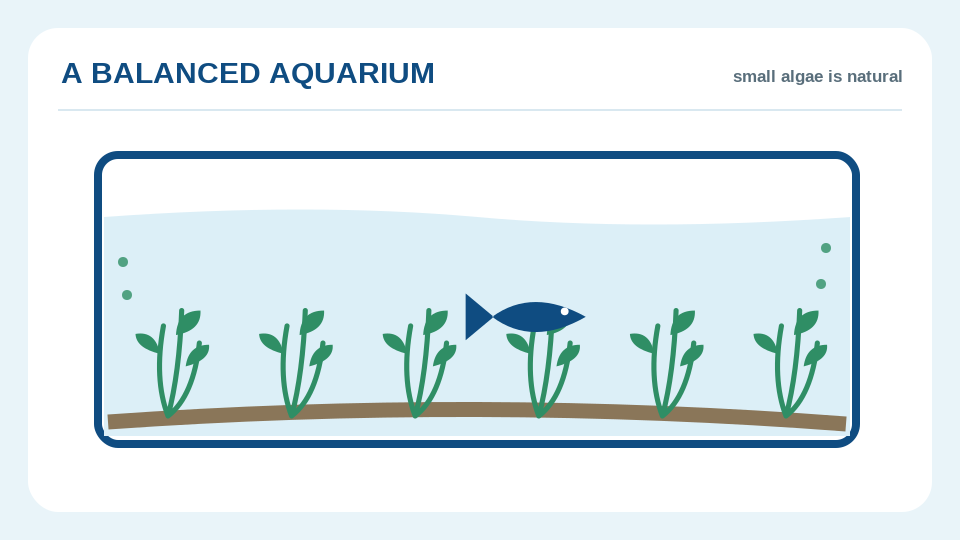
Excess algae is a resource and stability question. Light supplies energy, while food, waste, fertilizer and source water can supply nutrients. Healthy plants, useful circulation, biological processing and regular maintenance influence how much of that supply remains available. No one algae type or test result gives a complete diagnosis.
- Look for changes in light and nutrient input.
- Check feeding, decay, debris and filter flow.
- Compare tank water with source water when needed.
- Judge planted tanks by healthy growth and a workable match among light, nutrients and CO₂.
- Allow for the instability of a new or recently disturbed aquarium.
- Use algae appearance as a clue, then test the wider pattern.
Removing a patch can make the tank easier to observe, but lasting improvement comes from understanding why it grew. Record the tank's response to one measured adjustment before adding another. Instead of asking only how to kill the algae, ask what changed in the aquarium that allowed it to grow faster.
Ask Aqualume
Need Help With Your Aquarium?
Tell us what is happening in your aquarium and include the algae type, tank age, lighting schedule, and any recent changes if you know them.
Further reading

